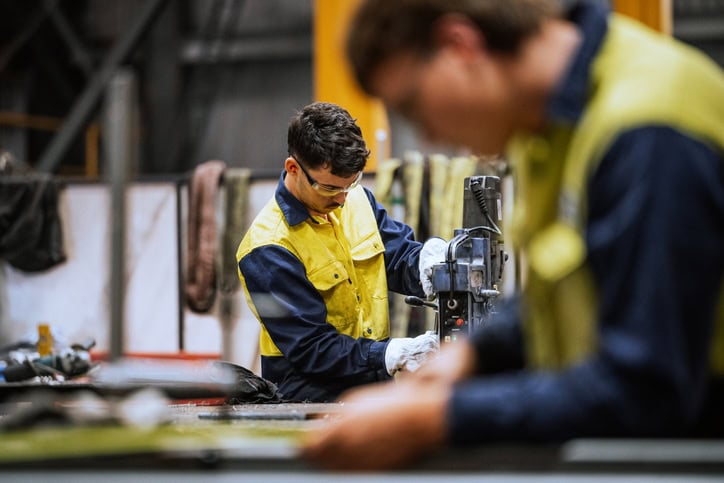
Manufacturing is an industry that has long focused on risk management. In fact, few other fields pay as much attention to physical hazards, strict procedures, and the consequences of mistakes. Over the years, safety standards, training, and compliance have become central to manufacturing.
Thankfully, these safety and compliance efforts have reduced injuries, prevented disruptions, and built accountability across teams, management, and facilities. Safety is now part of both formal systems and everyday decisions on the shop floor.
Unfortunately, mental health in the workplace has not developed as clearly as physical safety. Companies enforce physical safety systems but leave mental health to individual responsibility rather than treating it as a shared responsibility. Many people notice mental strain privately but rarely discuss it openly at work.
With labor shortages, more automation, tighter budgets, and longer hours, manufacturing workers face increasing pressure. These challenges are real and affect focus, consistency, and retention, all of which directly impact results.
Employee well-being has become a key concern. In manufacturing, mental health influences safety, quality, attendance, and turnover. Leaders need to recognize these issues and find ways to respond without disrupting operations.
Understanding Manufacturing Culture
The manufacturing industry has long valued reliability, endurance, and consistency within the workplace. In many companies, showing up when under personal strain or exhaustion isn’t just expected, it’s unintentionally encouraged. The job requirements demand strong resilience, and the workplace expects people to have it.
While this embedded culture helps drive productivity and accountability, it also shapes employees’ perceptions of mental health. Unfortunately, many leaders often avoid discussions about mental health because they see emotional strain as a personal issue, not a workplace matter.
Understanding Manufacturing and Mental Health Challenges
The manufacturing industry ranks among the highest for mental health challenges, including elevated rates of depression and anxiety compared to the national average. Even with these concerning industry statistics identified, many employee mental health concerns often go unnoticed on the job. In workplaces where reliability is linked to reputation, speaking up about stress or burnout can feel risky. This situation can lead to mental health discrimination, even if it is unintentional or informal.
For many organizations, the first sign of mental health issues will appear indirectly. Leaders will typically notice absenteeism, reduced engagement, increased errors, or unexpected turnover rather than in direct conversations. By the time concerns are recognized, the opportunity for early support has often passed. According to HR News, the manufacturing industry has historically struggled to address mental health at work, even as evidence continues to link employee well-being to safety, productivity, and retention.
The Mental Toll of Nontraditional Schedules
Many manufacturing operations rely on long hours, rotating shifts, and overnight work to meet production needs. While these schedules are often necessary, they put ongoing pressure on sleep, recovery, and emotional health.
Industries with physically demanding roles and nontraditional schedules experience higher rates of anxiety, depression, sleep disruption, and substance use than many other sectors.
Understanding Sleep Problems
Sleep problems affect more than just energy. Over time, irregular sleep can harm mood, focus, and stress management. When added to physically demanding work, the impact on mental health becomes even greater.
When it is hard to talk about mental health at work, some people may turn to substance use as a way to cope. This coping strategy can harm employee engagement and overall well-being while simultaneously creating new safety risks on top of existing challenges.
Employees with caregiving responsibilities often experience greater strain. Juggling family care, financial stress, and unusual work hours shows why employee well-being is important for both individuals and the long-term stability of the workforce.
Physical Safety Standards vs. Mental Health Standards
Manufacturing has invested heavily in physical safety over time. Clear standards, training, and accountability have reduced injuries and improved consistency on the floor. Mental health has not followed the same path. While safety processes are built into daily operations, mental health support often remains informal and uneven.
Why Mental Health Lags Behind
Manufacturing employers have spent decades improving physical safety. They did this through structured systems, ongoing training, and strong leadership. Safety standards became the norm across the industry, helping build consistency and trust. Unfortunately, mental health standards have not become part of the workplace in the same way. Many employers offer mental health benefits or employee assistance programs, but these supports often feel optional rather than essential.
This gap is more a matter of history than of neglect. Physical hazards are easy to see and happen quickly. Mental health risks develop slowly and are harder to measure, so they have taken longer to become part of formal systems.
When Mental Strain Becomes a Safety Risk
Mental health problems can affect concentration, reaction time, and judgment. These are all critical in manufacturing settings. According to the National Safety Council, untreated mental health conditions increase the likelihood of errors, near-miss incidents, and workplace accidents, making mental health a direct safety concern. In manufacturing, these benefits support not just well-being, but also performance and protection.
How to Change the Culture
Changing culture does not require a complete overhaul of how work gets done. Small, consistent actions shape what employees notice and trust over time. When leaders address mental health through everyday practices, support becomes integral to how the workplace operates rather than an additional initiative.
Leadership Signals Matter
Leaders shape workplace culture through what they say and what they prioritize. When leaders treat mental health as part of daily operations, employees take it seriously. According to Forbes, visible leadership commitment plays a key role in improving mental health in manufacturing environments.
Leaders do not need clinical training to make a difference. Consistent messaging, clear expectations, and follow-through show that supporting employee well-being also supports safety, productivity, and stable operations.
Training Managers to Respond
Frontline managers often notice changes in behavior, attendance, or performance before others do. Without training, managers may misunderstand these signs or avoid addressing them. Mental health training also helps managers respond appropriately while meeting legal requirements.
Training gives managers clear guidance on what to say, when to act, and when to escalate concerns. It also reduces the risk of mental health discrimination at work by encouraging consistent responses instead of personal judgment.
Strengthening Connection on the Floor
Shift-based work can isolate employees, especially when teams rotate or rarely overlap. Isolation makes it harder to notice early signs of stress and easier for problems to grow unnoticed. Building stronger connections on the floor improves engagement and helps issues surface earlier.
Simple actions, such as consistent team assignments, peer check-ins, and shared start-of-shift touchpoints, foster familiarity. When employees know each other better, they are more likely to notice changes and raise concerns early.
Making Support and Benefits Visible
Many employers invest in well-being programs and mental health benefits, but employees often underuse them. Confusion about access, coverage, or confidentiality frequently creates a barrier.
Clear and repeated communication improves understanding and trust. When employees know what support is available and how to access it, they are more likely to seek help before stress affects their safety, performance, or attendance.
Normalizing Mental Health Days
Mental health days at work support recovery when organizations define them clearly and apply them consistently. Clear guidelines help employees understand expectations and reduce misuse.
According to the National Safety Council, untreated mental health challenges increase the risk of errors and workplace incidents. Planned time away helps employees reset before fatigue creates safety or quality risks.
Supporting Caregiving and Loss
Caregiving responsibilities place ongoing pressure on employees, especially in roles with limited schedule flexibility. Managing family illness, elder care, or loss affects focus, attendance, and retention.
According to WebMD Health Services, stress linked to caregiving and exhaustion contributes to higher rates of anxiety and burnout in physically demanding industries. Providing caregiving support helps employees balance responsibilities while maintaining work performance.
Closing the Benefits Awareness Gap
Strong benefits programs lose impact when employees cannot easily navigate them. Centralized access reduces confusion and removes friction.
Platforms that bring mental health and caregiving resources together in one place help employees quickly understand their options. When access to support is straightforward, employees are more likely to seek help early rather than wait until problems affect their work.
Designing Smarter Rotations and Breaks
Scheduling choices directly affect recovery. Predictable rotations and protected breaks help employees maintain focus and energy over time. These practices support well-being without reducing productivity or discipline.
Consistent schedules and adequate recovery time contribute to safer and more stable teams in manufacturing settings. More innovative scheduling initiatives protect both people and operations.
Supporting Employees Through Caregiving with Homethrive
Caregiving often imposes pressures that employees do not discuss at work. Finding care for a child, supporting an aging parent, or managing a family health crisis can affect focus, attendance, and stress levels. Homethrive helps employers support these needs by giving employees access to guidance, tools, and resources in one place.
By simplifying how employees find and use caregiving support, Homethrive reduces confusion and lowers the barrier to getting help. This approach supports workplace stability while recognizing the realities employees face outside of it.
Manufacturing has shown that cultural change is possible. The industry transformed its approach to physical safety through leadership and structure. Mental health directly influences performance, engagement, and day-to-day operational reliability. For the manufacturing industry, supporting mental health at work ensures that systems designed to protect safety extend fully to the people who make operations possible.
By partnering with Homethrive, you can help employees reclaim valuable time and energy to focus on their work, families, and personal well-being.
Show your team they don’t have to choose between their careers and caregiving responsibilities. Contact us today to explore how Homethrive can enhance your employees’ well-being and productivity.